
· Historical sources reviewed 12 November 2026
Who was Sandy Jardine?
Sandy Jardine (1948–2014) was a Rangers, Hearts and Scotland footballer whose career extended well beyond the position in which he became best known. Rangers’ official remembrance account describes a player who arrived from school at fifteen and made his first-team debut against Hearts in February 1967, shortly after turning eighteen.
He began that match at right half, not right back. The distinction is a useful starting point: Jardine’s reputation as an elegant defender emerged after several seasons in different roles. For visitors who know him chiefly through an Ibrox stand name, there is a longer playing story behind the tribute.
How a forward became an overlapping full back
Rangers records that manager Davie White used Jardine at centre forward at the start of the 1968/69 season. He scored eleven goals in twelve consecutive appearances. When Willie Waddell took over towards the end of 1969/70, he moved Jardine to full back, where his pace and attacking instincts complemented his tackling.
That change did not remove the attacking side of his game. The club’s account identifies him with the overlapping full-back role: a defender able to move beyond the player in front of him and contribute to attacks. His early experience elsewhere on the pitch helps explain why the position suited him.
Rangers, Scotland and a second chapter at Hearts
Jardine was part of the Rangers side that won the European Cup Winners’ Cup in 1972, having also played in the 1967 final. The Scottish Football Museum records three league championships with Rangers, in 1975, 1976 and 1978. Its tribute credits him with the Scottish Player of the Year award in 1975 and again with Hearts in 1986.
His Scotland record adds another dimension. The museum records 38 caps and appearances at both the 1974 and 1978 World Cup finals. The later award at Hearts, at the age of 37, shows that his contribution was not confined to his Rangers years. These are achievements from his career, not Rangers’ present-day trophy totals.
The heritage work behind the familiar name
Jardine’s connection to Ibrox continued through its heritage collection. Rangers’ account of its Hall of Fame explains that Jardine and John Greig helped establish it with a committee. The criteria included service, appearances, honours, international caps and exceptional ability—not simply popularity with one generation of supporters.
The Scottish Football Museum’s curator Richard McBrearty recalled Jardine representing Rangers on the Scottish Football Heritage Network from its formative year in 2008. In his April 2014 tribute, he remembered an Ibrox tour on which Jardine knew the stories behind the objects and described his role in developing the club collection. That testimony gives a more personal sense of his work than a list of medals alone.
John Greig: Jardine’s fellow player and heritage collaborator

Why the former Govan Stand carries his name
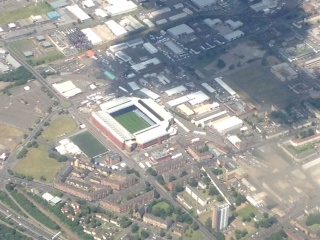
In July 2014, the Glasgow Times reported Rangers’ plans to rename the Govan Stand in Jardine’s memory before the opening Championship match against Hearts. The Sandy Jardine Stand therefore connects an everyday matchday location with both a distinguished player and someone who helped preserve the club’s past.
This article follows the person, rather than repeating the stand’s construction history or recommending a particular seat. Our development guide covers the building phases; the stand-choice guide compares viewing perspectives and access considerations. For a museum or stadium visit, use the current official booking links in our existing guides rather than assuming access to a particular object or room.