
· Historical sources reviewed 12 November 2026
Who was Alan Morton?
Alan Morton (1893–1971) played for Queen’s Park, Rangers and Scotland. Rangers identifies him as Bill Struth’s first signing in 1920. The Scottish Football Museum describes an outside left—a winger on the left side—whose speed, elusive movement and accurate crossing made him effective for club and country.
At five feet four inches, Morton did not rely on imposing stature. The museum notes that he was naturally right-footed but developed his left foot through constant practice. That detail explains something important about his game: the quality associated with his position was a skill he worked to acquire, not simply a consequence of which foot came naturally.
The crossing behind Scotland’s Wembley win
Rangers’ Hall of Fame account places Morton at the centre of Scotland’s 5–1 victory over England at Wembley in 1928. He supplied the crosses for all three of Alex Jackson’s goals; Alex James scored Scotland’s other two. The side became known as the Wembley Wizards.
This was a Scotland international at Wembley, not a Rangers fixture at Ibrox. Its place in Morton’s story comes from the same wing play that Rangers supporters knew at home. Rather than reducing the afternoon to the score, his contribution shows how creating goals could make a winger the defining presence in a match.
Why he was called the Wee Blue Devil
Both Rangers and the Scottish Football Museum associate Morton with the nickname ‘Wee Blue Devil’. Rangers’ account tells the story of a frustrated England supporter shouting the phrase during the Wembley match and another spectator hearing it. That is the club’s version of how the nickname caught on, rather than a quotation independently documented here from the day itself.
The museum records 31 Scotland caps and fifteen appearances for the Scottish League representative side. These were different teams and should not be combined into an international-cap total. The Wembley performance was the most famous example of a wider representative career.
His Rangers record—and why totals need care
The Scottish Football Museum credits Morton with nine league championships and Scottish Cup victories in 1928 and 1930. The first of those Cup wins belonged to Rangers’ first league-and-Scottish-Cup double, already explored in our Bill Struth article. Here the focus is the winger’s contribution and the connection between his club and Scotland careers.
The sources do not give identical appearance and goal totals. Rangers’ Hall of Fame account gives 440 games and 105 goals; the Scottish Football Museum gives 495 appearances and 115 goals. Neither page explains the difference in counting scope. Those figures are therefore attributed separately here, not presented as one settled career total. On retiring as a player, Morton stayed with Rangers as a director, according to the museum.

The portrait above the Ibrox staircase
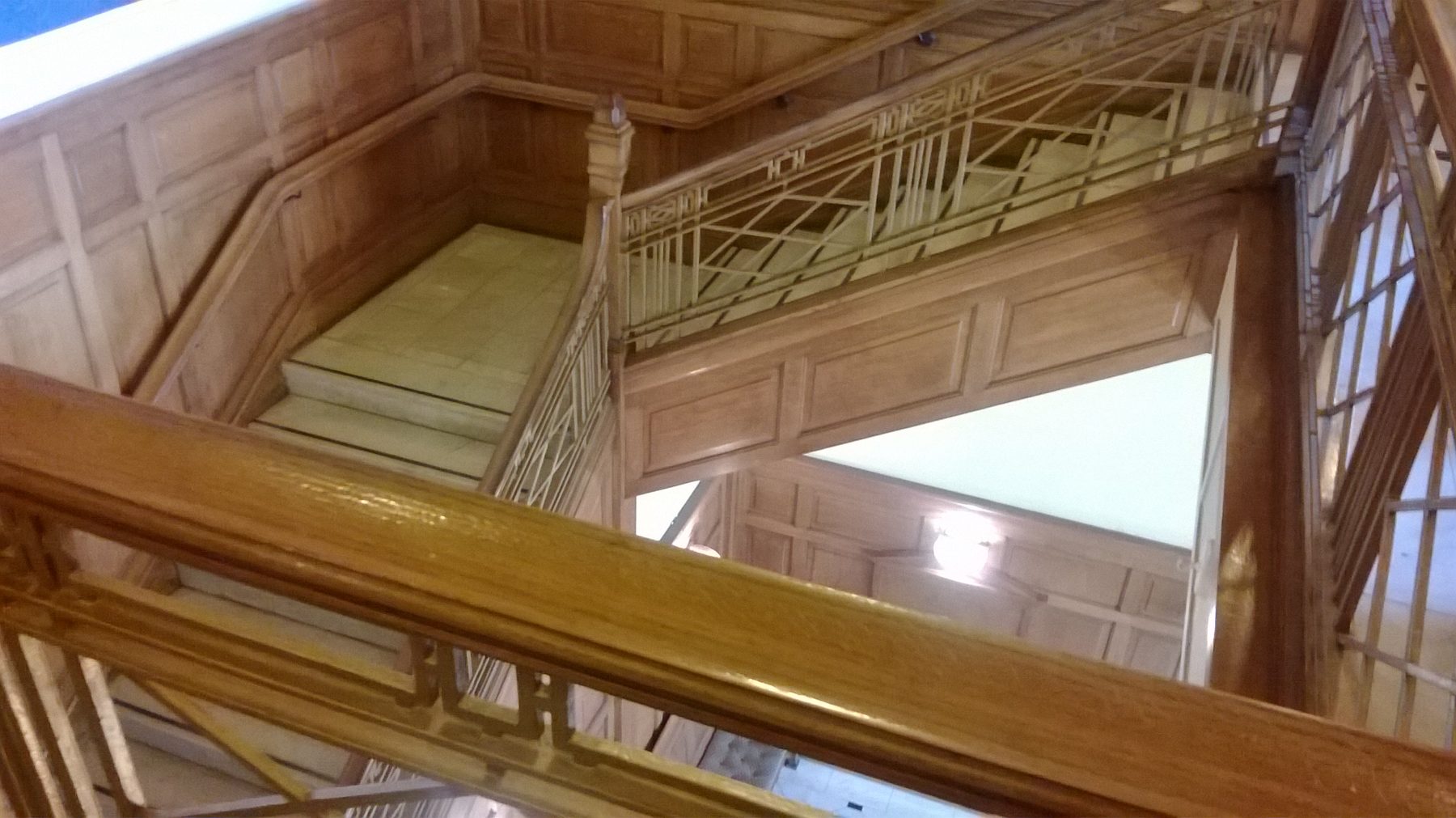
Rangers locates Morton’s portrait at the top of the marble staircase in the Main Stand. That is a tangible connection between a football biography and a place visitors may recognise from stadium photographs. The staircase photograph here documents the interior in March 2014; it is not a close-up portrait or evidence of the current display arrangement.
There is also a separate museum connection at Hampden: Rangers’ account identifies the signed match ball from the 1928 Wembley game with the Scottish Football Museum. Do not confuse that national museum with the Rangers Museum at Edmiston House. Our existing Edmiston House and tour guides cover current Ibrox booking information, while the sources below provide the historical accounts.