
· Historical sources reviewed 11 November 2026
From trainer to Rangers manager
Bill Struth (1873–1956) arrived at Rangers as a trainer in 1914. According to the Scottish Football Museum’s Hall of Fame biography, he had begun his football career as a trainer at Clyde in 1907. In 1920 he became Rangers manager, a position he held until his retirement in 1954.
The distinction between those roles matters. His association with Rangers began six years before his managerial tenure, and it is the 1920–1954 period that the museum identifies with his sustained influence on the club’s results. For someone encountering his name on a stand rather than in a football history book, that unusually long spell explains why he remains central to the Ibrox story.
What Rangers won under Struth
The Scottish Football Museum credits Rangers under Struth with 18 league titles, ten Scottish Cups and two Scottish League Cups. Those are honours attributed to his management, not the club’s current overall trophy totals. They show success across several generations of players rather than a brief run built around one team.
The museum also describes a strict disciplinarian who demanded results while ensuring his players had strong facilities. That account presents standards and preparation as part of the same approach: expectations were accompanied by investment in the conditions in which players worked. It is more useful evidence of his management than an unattributed quotation or a later anecdote repeated without a source.
Alan Morton and the breakthrough double
Rangers identifies Alan Morton as Struth’s first signing in 1920. The winger joined from Queen’s Park and became one of the defining players of his era. The club’s Hall of Fame account provides a specific example of what Struth’s Rangers achieved: the first league-and-Scottish-Cup double in 1927/28.
The Scottish Cup victory ended a twenty-five-year wait for that trophy. Rangers beat Celtic 4–0 in the final, then confirmed the league championship a week later with a 5–1 win over Kilmarnock. That sequence gives the honours list a human scale: Morton and his team-mates were winning the matches that turned a manager’s long tenure into a lasting reputation.

Why his name belongs to the Main Stand
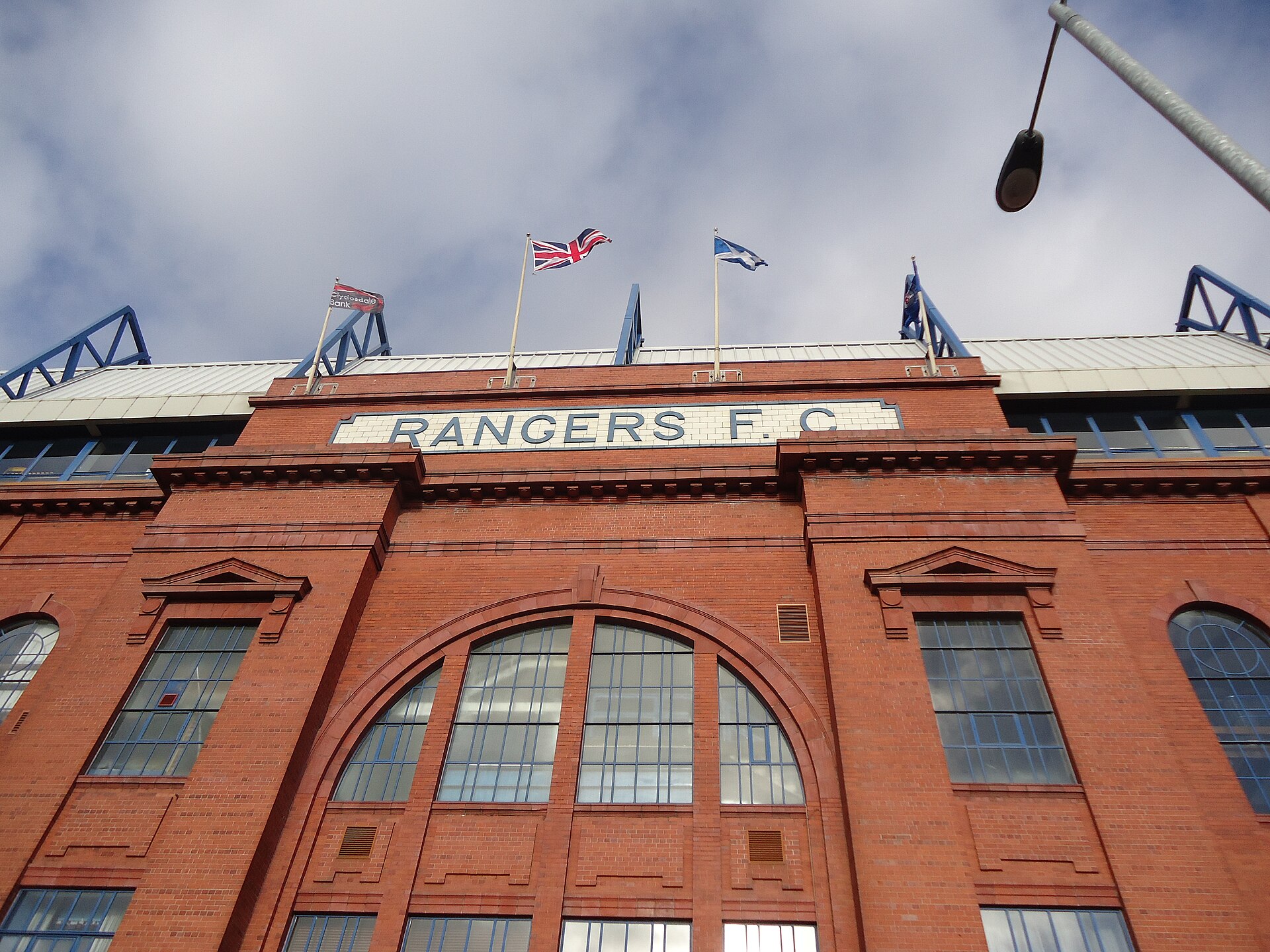
The official listed-building record identifies the structure on Edmiston Drive as the Bill Struth Main Stand. Its original construction, credited to Archibald Leitch & Partners in 1926–29, took place during Struth’s years as manager. His name and Leitch’s therefore tell two different stories about the same building: one about the club’s leadership, the other about its architectural design.
The name should not obscure the later changes. The upper tier and roof works shown in our reconstruction gallery belong to a much later period, not Struth’s management. Our development guide explains those phases, while the architecture article concentrates on the surviving frontage and interior. This biography follows the person commemorated in the name rather than repeating that building chronology.
Finding the history on a visit
The Scottish Football Museum inducted Struth into its Hall of Fame in 2008. Its biography is a useful starting point for the dates and honours that anchor his reputation. At Ibrox, the stand’s name offers a more immediate reminder: supporters use it as an everyday location as well as a historical tribute.
A museum or stadium visit can place that name alongside the wider Rangers story. Follow our Edmiston House and tour guides for current official booking information; this article does not promise access to particular rooms, portraits or exhibits. To understand the other figure behind the building, read the companion account of Archibald Leitch and his long relationship with Rangers.