
· Rangers’ founding and anniversary accounts reviewed 15 November 2026
Who founded Rangers?
Rangers names four founders: Moses McNeil, his brother Peter McNeil, William McBeath and Peter Campbell. The club traces their decision to form a team to the spring of 1872. Its 150th-anniversary accounts remember them as the Gallant Pioneers—the young men behind the beginnings of a club that would later make Ibrox its home.
The names are worth separating from the stadium’s familiar figures. Bill Struth and Archibald Leitch shaped much later chapters of Rangers and Ibrox; neither was one of the four founders. This is a story about the club’s origins, not the opening of the present stadium or the construction of its Main Stand.
Moses McNeil and the name Rangers
The club’s Hall of Fame biography places Moses McNeil at the centre of the initial idea. It describes a sixteen-year-old student excited by association football, a sport being pioneered in Scotland by Queen’s Park. According to that account, he had encountered the name ‘Rangers’ in an English rugby football annual and suggested adopting it for the new team.
Some details of the founding walk are described differently even within Rangers’ own accounts. The 2020 McNeil biography places it in a now-vanished park in the Kelvinbridge area; the 2021 anniversary announcement identifies West End Park, now Kelvingrove Park. Both connect the idea with Glasgow’s west end. Those accounts do not justify identifying one precise present-day spot as an independently verified founding location.
The first football came before Ibrox
Rangers’ McNeil biography says the details of the earliest match are not completely clear, but that it is thought to have taken place in May 1872 at Flesher’s Haugh on Glasgow Green. The opponent was Callendar and the result a goalless draw. Keeping the club’s qualification matters: an exact match date should not be invented where the source itself expresses uncertainty.
The anniversary announcement describes Flesher’s Haugh as Rangers’ home for the first three years and notes that the club had several Glasgow homes before moving to the site of the current Ibrox Stadium in 1899. Glasgow Green belongs to the founding chapter; Ibrox belongs to the later story of a team finding a lasting stadium home.
The Moonlighters and the early club identity
The club’s February 2022 anniversary announcement recalls another early nickname: the Moonlighters. Rangers explains it as a reference to training and preparation after dark before the club’s first Scottish Cup final appearance in 1877. It is a small detail that makes the early years feel less remote: a developing team had to find time to prepare as well as somewhere to play.
The 2021 Gallant Pioneers kit announcement also connects early identity with surviving designs. It describes a scroll crest on 1881 season-ticket covers, when Rangers were playing at Kinning Park, and on early player caps and documents. The club presents the anniversary kit as a tribute to that heritage. This is evidence of how Rangers interpreted its past in 2021, not a claim that the commemorative shirt remains on sale.
Why the club and stadium anniversaries differ
Rangers celebrated its 150th anniversary in 2022 because its founding story begins in 1872. Ibrox Stadium’s 125th-anniversary celebrations followed in 2024, referring to the present stadium’s opening in 1899. The two milestones recognise different subjects: a football club and the ground it later occupied.
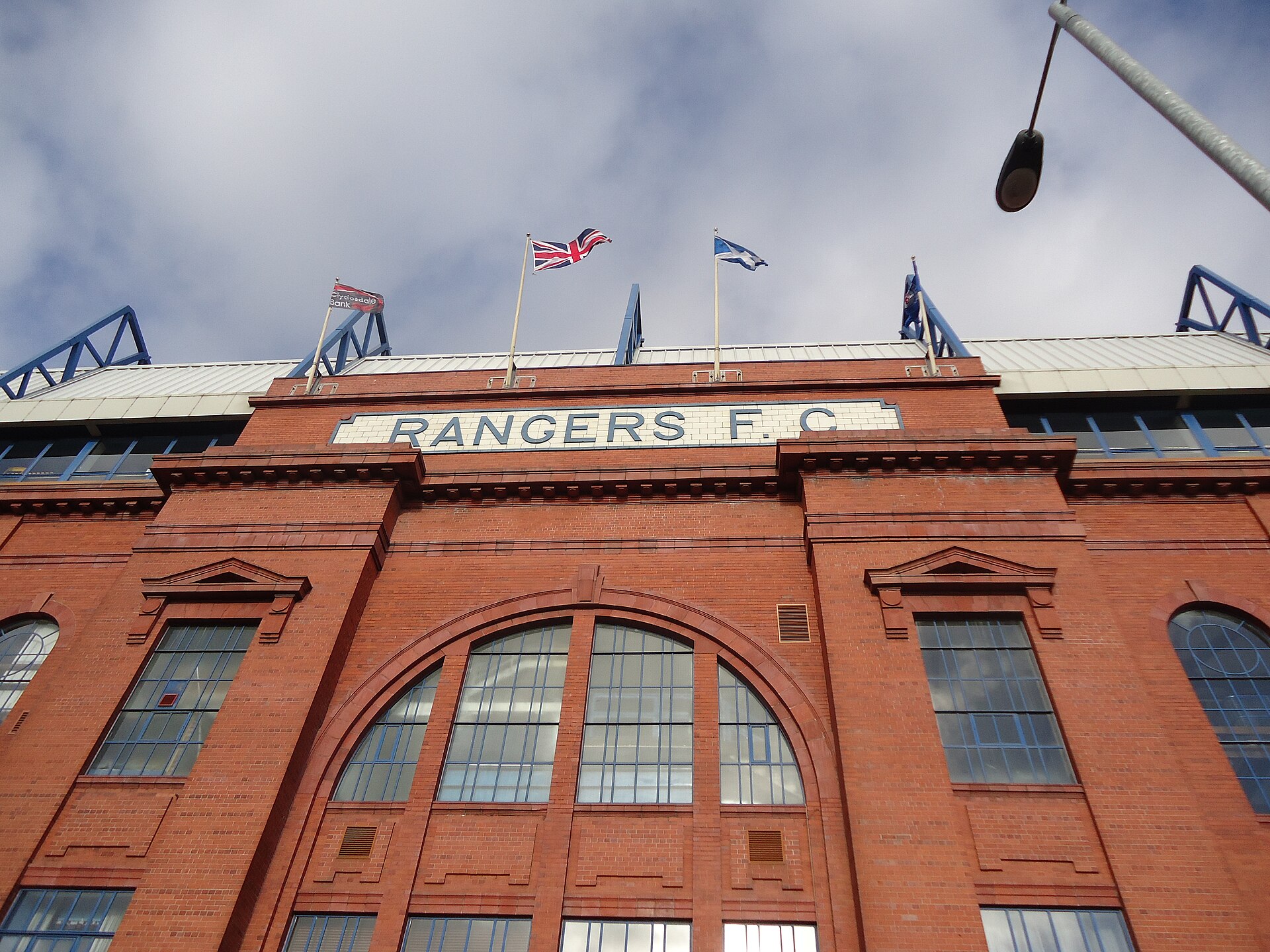
That distinction also explains why a photograph of today’s Main Stand cannot illustrate the founders’ first match. The entrance image here was taken in February 2012 and shows the later home of their club. Our Ibrox history page follows the stadium’s chronology, while this article stays with the people, names and early identity that preceded it.
Following the origins into the museum
For an Ibrox visitor, the founders’ story provides a starting point before the later biographies and building history. Read it alongside the accounts of Bill Struth, Alan Morton and Sandy Jardine to see how successive generations added to the club’s identity, rather than treating all its familiar names as part of one founding moment.
The Rangers Museum at Edmiston House is a separate present-day visitor destination. Our existing guide links to official booking information; this article does not guarantee that a particular founding document, object or anniversary display is currently on view. The sources below preserve the club’s own accounts, including their uncertainty about the earliest match and their differing descriptions of the founding walk.