
· Rangers’ 2021 and 2024 biographies checked 18 November 2026
A winger developed under Bill Struth
Waddell’s connection with Ibrox began long before he managed the club. Rangers’ Hall of Fame biography describes reserve football at fifteen, experience with Strathclyde Juniors and a professional contract in May 1938. His first-team debut was a friendly against Arsenal later that summer; he scored the only goal. His first league match followed against Ayr United.
That distinction matters when dating a playing career: a first-team friendly and a league debut are different milestones. The same biography describes a fast winger whose crosses supplied Willie Thornton, while his development under Bill Struth places him within the generation that later became known for Rangers’ post-war success.
Bill Struth and the Rangers tradition Waddell inherited
Why the playing statistics need care
The outbreak of the Second World War interrupted normal Scottish League football. Waddell continued playing in wartime competitions, but those appearances should not be silently added to standard peacetime competitive totals. Rangers’ 2021 centenary account gives 339 official appearances and 64 goals, separately describing more than 200 wartime appearances and another 88 goals.
The club’s biographies also differ on his Scotland total: the 2021 account says 17 caps, while its 2024 Hall of Fame article says 18. Both are linked below rather than one being repeated as an undisputed figure. The shared story is clearer than that numerical disagreement: Waddell was an influential Rangers winger whose career was divided by the war.
Kilmarnock success and a return to Ibrox
After retiring as a player in 1956, Waddell moved into management at Kilmarnock. Rangers’ 2021 account records the club’s league championship in 1965, secured with a final-day victory over Hearts at Tynecastle. He then worked as a sports journalist before replacing Davie White at Rangers in December 1969.
His return was not to a side dominating the league. Celtic were in their successful Jock Stein period, and Waddell had to reshape Rangers. One early success came in the 1970/71 League Cup final, when sixteen-year-old Derek Johnstone headed the winner against Celtic. Jock Wallace was part of the coaching partnership that developed the team.
The response to the 1971 Ibrox Disaster
On 2 January 1971, 66 supporters died in the crush on Stairway 13. Rangers’ centenary biography describes Waddell coordinating the club’s response and arranging representation at the victims’ funerals. This was a tragedy affecting families and communities, not merely a turning point in a football manager’s career.
The same account credits him with driving the later redevelopment, making safety a central concern and examining other European grounds. That work continued beyond his period as team manager. The detailed disaster chronology and remembrance information belong on our separate page, while the stadium-development guide follows the changing stands; neither should be compressed into a claim that Ibrox was rebuilt immediately in 1971.
The manager of the 1972 European winners
On 24 May 1972, Rangers beat Dynamo Moscow 3–2 in Barcelona to win the European Cup Winners’ Cup. Waddell was the manager, with John Greig captaining the side. The achievement was distinct from the stadium rebuilding and should be dated separately from the disaster of the previous year.
Our Barcelona article covers the competition and the Ibrox route to the final. Here the important point is Waddell’s role: he led the team through the campaign before handing responsibility to Wallace later in 1972. Recognising Wallace’s coaching contribution does not change who was the manager when the trophy was won.
A legacy beyond the manager’s office
Waddell went on to serve Rangers as general manager, managing director and vice-chairman. Rangers’ 2021 tribute describes him remaining on the board until his death in 1992. His influence therefore cannot be measured only by the results of the team he managed from 1969 to 1972.
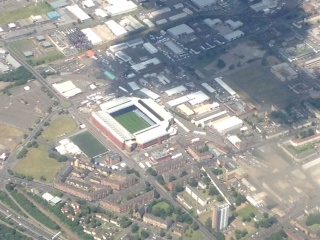
Looking at Ibrox today, the useful distinction is between the older Main Stand and the later redevelopment of the other sides. The licensed aerial photograph was taken in 2014: it helps explain the stadium’s layout, but is not a record of Waddell supervising construction. Our development page provides the stand chronology and dated documentary views.